The Punchline Isn't the Joke: How Comedy Specials Engineer Silence to Destroy You

There's a moment in almost every great stand-up special where the comedian stops talking. Completely. The audience shifts. Someone coughs. And then — boom — the room explodes. You laugh harder than you probably should. You rewind it. You send the clip to three people.
That pause wasn't a breath. It was a weapon.
Comedy specials are one of the most deceptively engineered formats in entertainment, and the silence inside them is doing work that most viewers never consciously register. The jokes are the surface. The architecture underneath — the dead air, the held reaction shots, the uncomfortable stillness — is what actually controls how hard you laugh, how long you stay, and whether you share the clip at all.
Timing Isn't Instinct, It's Infrastructure
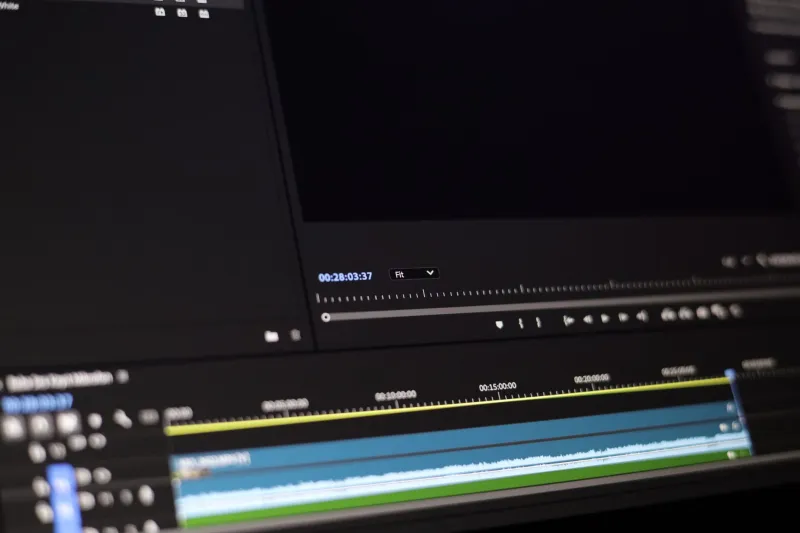
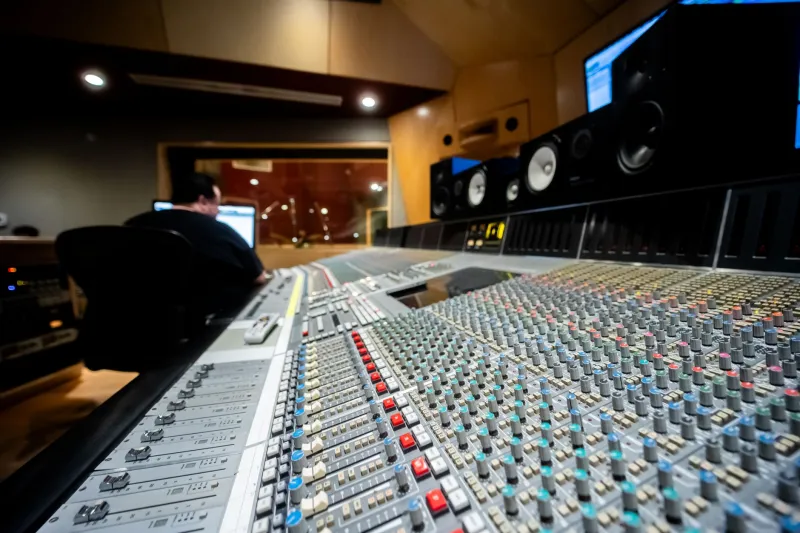
Every comedian will tell you timing is everything. What they're less likely to explain is that timing is a technical document as much as it's a performance instinct. The pauses in a comedy special are mapped. They're rehearsed. And in the post-production phase, they're often trimmed, extended, or repositioned to hit harder on screen than they did in the room.
Live comedy and filmed comedy are different beasts. In a theater, a comedian reads the room in real time — they feel the energy, they compress or stretch a beat based on what the crowd gives back. But a special is a fixed artifact. Once it's locked, the silence has to carry all of that dynamic responsiveness on its own.
Directors and editors working on specials know this. The pause before a punchline creates what psychologists call anticipatory tension — your brain starts generating predictions about what's coming, and when the punchline lands, the release is amplified by how long you were made to wait. The longer the silence, within reason, the bigger the payoff. Push it too far and it deflates. Land it right and you've manufactured a laugh that's 40% funnier than the joke itself.
The Reaction Shot Is a Cheat Code
Here's something directors of comedy specials figured out a long time ago: cutting to the audience during a pause doesn't just fill dead air. It tells you how to feel.
When a comedian goes quiet and the camera drops to a front-row face — mouth slightly open, eyebrows up, bracing — you're receiving an emotional cue. You're being shown the correct response before the punchline even arrives. It's the laugh track of the streaming era, except it's real people and it feels completely organic.
Netflix specials in particular have gotten surgical about this. Watch a Dave Chappelle or a Hannah Gadsby or a John Mulaney special with the sound off and just track the edit cuts during the quieter moments. You'll notice the camera rarely stays on the performer during a long pause. It travels. It finds a face. It returns. That journey is choreographed to keep your attention from wandering and to prime your emotional response before the joke completes.
That's not documentary filmmaking. That's behavioral engineering wearing a documentary costume.
Discomfort Is a Delivery Mechanism
Not all silence in comedy is setup-and-punchline mechanics. Some of it is designed to make you genuinely uncomfortable — and that discomfort is the point.
Comics like Jerrod Carmichael, Hannah Gadsby, and early-era Louis CK built entire sequences around the audience not knowing whether it was okay to laugh yet. The silence in those moments isn't anticipatory — it's confrontational. It forces you to sit with something before the comedian decides whether to give you the release of laughter or leave you holding it.
This is a completely different psychological mechanism. Instead of tension-and-release, it's tension-and-recognition. The silence makes you aware of your own reaction, which makes the eventual laugh (or non-laugh) more meaningful and more memorable. You don't just laugh — you laugh at yourself for laughing, which creates a loop that's far stickier than a clean punchline.
Platforms love this, by the way. Sticky moments get clipped. Clips get shared. Shared clips drive subscriptions. The uncomfortable silence that made you squirm on your couch is, downstream, a marketing asset.
What the Algorithm Does With the Quiet
Streaming platforms don't just passively host comedy specials — they study them. The same data infrastructure that tracks where you paused a drama or skipped an intro applies to specials, and the silence data is particularly interesting to analysts.
If viewership data shows that a significant chunk of the audience rewinds a specific 30-second window in a special, that window gets flagged. If that window contains a long pause followed by a big laugh, the platform now has empirical evidence that this specific comedic structure drives engagement. That information feeds back into content recommendations, into what specials get greenlit, and eventually into what comedians are coached to do when they're developing new material for the platform.
The comedian thinks they're working out their timing. The platform is running A/B tests on human laughter.
It's a closed loop that most people in the industry don't talk about openly, but it's reshaping the aesthetics of comedy at a structural level. The specials that perform best on streaming aren't necessarily the funniest by traditional stand-up metrics — they're the ones whose silence hits the data benchmarks.
The Pause as Signature
The comedians who've figured this out — consciously or not — have turned the pause into a personal trademark. Think about how immediately recognizable a long Norm Macdonald beat was. Or the way Chris Rock used to let a crowd sit in the middle of a sentence. Or how Nate Bargatze can stretch a moment of confusion so long it becomes its own punchline.
These aren't stylistic quirks. They're tested instruments. The comedians who survive long enough to build a catalog learn, through thousands of repetitions, exactly how long their particular audience will wait before the silence becomes its own joke. They calibrate. They adjust. And when that calibration gets locked into a special, it becomes the template.
What you're watching when you watch a great comedy special isn't a person talking. It's a person and their silences, working in tandem, in a format that's been optimized from the live room to the edit suite to the streaming interface to your living room couch.
The Nothing Is the Something
Next time you're watching a special and a comedian goes quiet, don't just wait for the punchline. Watch the edit. Notice where the camera goes. Feel what your body is doing — the lean forward, the held breath, the anticipatory grin. You're not passively receiving entertainment. You're being moved through a designed emotional sequence.
The pause isn't dead air. It's the most alive part of the whole thing.
And someone in a room somewhere built it specifically for you.