Comedy Is a Lab Experiment Now — And Your Face Is the Data
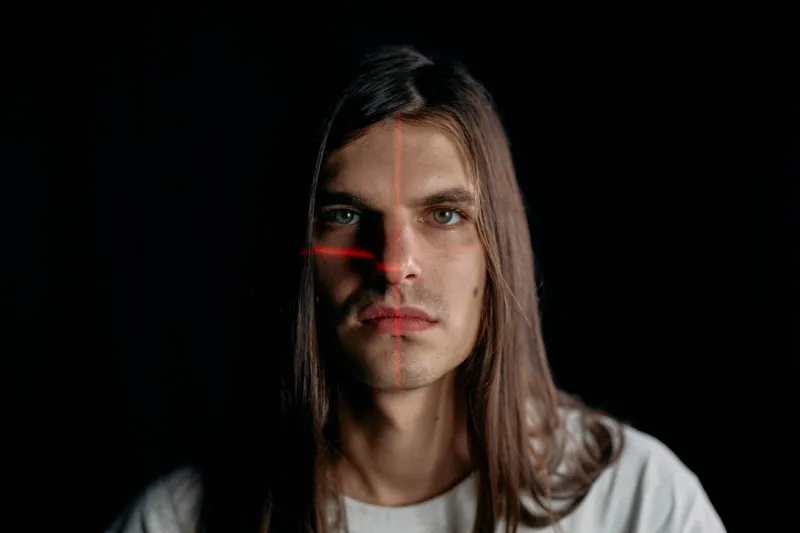
Somewhere between the setup and the punchline, a machine is watching you.
Not in a creepy government thriller kind of way — more like a very patient, very data-hungry engineer who has decided that your involuntary facial twitch at the 14-second mark of a comedy sketch is the most valuable piece of information in the room. Welcome to the new frontier of entertainment tech, where the laugh track didn't die — it just got a PhD.
The Old Science of Funny
Comedians have always known that timing is everything. Johnny Carson had it. Richard Pryor weaponized it. Dave Chappelle still uses silence like a scalpel. But that knowledge was earned through years of bombing in front of live crowds, reading the room, adjusting, failing again, and eventually cracking some kind of code that felt almost mystical.
The problem with mystical is that you can't A/B test it.
So the entertainment industry — which has never met a human experience it didn't want to optimize — started looking for a more systematic answer. And as it turns out, your face has been giving away the punchline this whole time.
Microexpressions Don't Lie (Even When You Do)
Here's the thing about human emotional response: your conscious brain is slow. Your face is fast. Before you've even processed whether something is funny, your facial muscles are already reacting — tiny flickers of expression that last less than a fifth of a second. Researchers call these microexpressions, and they're basically your body's unfiltered commentary on everything happening around you.
AI systems trained on facial action coding — a framework originally developed by psychologist Paul Ekman in the 1970s — can now detect these microexpressions in real time through a standard camera. What that means for entertainment platforms is significant: they can theoretically track not just whether you laughed, but when you almost laughed, when you braced for a joke that didn't land, and when your face flickered with something that looked suspiciously like grief dressed up as amusement.
That last part is where it gets interesting.
The Cry-Laugh Algorithm
Some of the most powerful comedic moments aren't funny — they're devastating. Think of Bo Burnham's Inside, which used the structure of comedy to deliver something closer to a panic attack. Or Hannah Gadsby's Nanette, which deliberately dismantled the tension-release mechanism of traditional joke structure to force audiences to sit inside discomfort instead of laughing their way out of it.
Those specials broke people. And they broke people on purpose.
Now AI systems are being trained to identify the exact emotional signature of that experience — that specific convergence of laughter and distress that makes certain comedy feel transcendent rather than just entertaining. Research groups at several major universities, including work adjacent to MIT's Media Lab, have been developing models that map emotional blending: moments where the face registers competing signals simultaneously.
The goal, at least in the academic context, is understanding human emotional complexity. But the commercial applications are obvious. If an algorithm can identify the precise frame at which a joke tips from funny to something deeper, platforms can start engineering more of those moments — systematically.
Real-Time Adjustment: The Next Unlock
Most of what's described above is still in early-stage territory for consumer platforms. But the direction is clear. Companies like Netflix and YouTube have already moved well past simple engagement metrics — watch time, rewind frequency, skip rates — into behavioral pattern analysis that borders on psychological profiling.
The next logical step is closing the feedback loop in real time.
Imagine a comedy special that slightly adjusts its pacing based on aggregate audience response data collected during early screenings. Or a stand-up set that gets re-edited between its first weekend and its wide release because biometric testing revealed that a particular bit was landing three beats too late for the target demographic. That's not science fiction — that's a production decision that becomes increasingly feasible as the data infrastructure matures.
Some streaming platforms are already experimenting with dynamic content — branching narratives, adjustable audio mixes, personalized cold opens. Applying the same logic to comedic timing is a smaller leap than it sounds.
The Comedian in the Loop
Here's where it gets philosophically messy: what happens to the comedian?
Stand-up, more than almost any other art form, is built on a specific human voice working through a specific human experience. The awkwardness, the misfires, the moments where a bit almost works but doesn't — those imperfections are often what make the material feel real. When you watch someone like Maria Bamford or Patton Oswalt, you're not just watching jokes. You're watching a person negotiate their own psychology in public.
If an AI system starts smoothing out the rough edges based on aggregate emotional data, something gets lost. The algorithm optimizes for maximum response, but maximum response isn't always the point. Sometimes the point is the friction.
There's also a more immediate concern for working comedians: if platforms develop strong enough predictive models, they gain enormous leverage in the editing room. A special gets flagged because the algorithm says three bits in the second act are underperforming emotionally. Does the comedian have the standing to push back? Or does the data win?
What 51EY Is Watching
The technology is real, the commercial pressure is real, and the timeline is shorter than most people realize. What's less clear is whether the entertainment industry has thought carefully about what it's actually building.
Engineering emotional responses at the frame level isn't just a distribution strategy — it's a form of authorship. When an AI system determines that a punchline lands harder at 2.3 seconds rather than 3.1, it's making a creative decision. And right now, nobody's particularly clear on who's accountable for that decision, or what it means for the humans on both sides of the screen.
Your laugh is data. Your almost-cry is even better data. And somewhere in a server farm, an algorithm is getting very good at telling the difference.