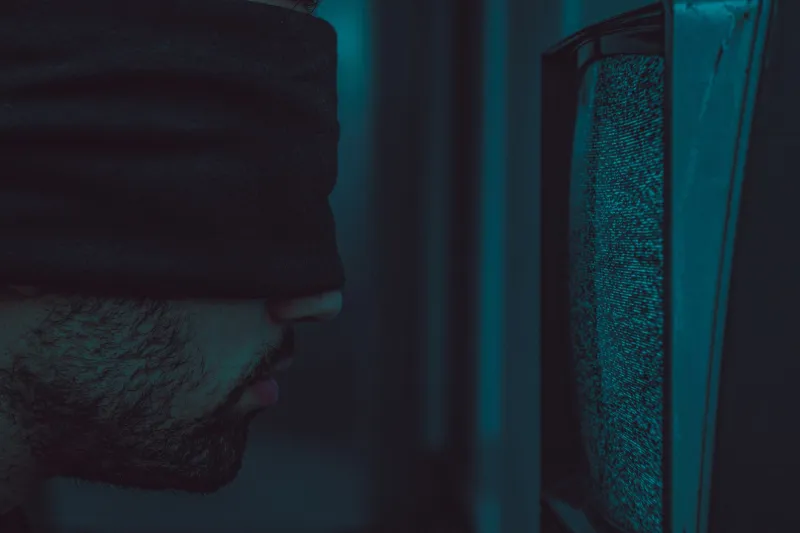
Waiting Is the Product: The Hidden Psychology Behind Your Favorite Show's Disappearing Act

You finished the finale. The credits rolled. You sat there for a second — maybe longer than you'd like to admit — staring at the screen like it owed you something. Then came the notification, the little card, the FAQ buried in a press release: Season 3 coming in 2026.
That feeling you got? The hollow mix of frustration and desperate want? That wasn't an accident. That was a deliverable.
Streaming platforms have quietly industrialized the hiatus. What used to be a logistical reality — production takes time, writers need breaks, VFX pipelines don't run themselves — has been repurposed into something far more calculated. The gap between seasons is now a psychological instrument, and it's being played with precision.
The Neuroscience of the Wait
Here's what's happening in your head when a show you love goes dark: your brain's dopamine system, which lit up every time a new episode dropped, doesn't just shut off. It shifts into a different mode — one neuroscientists call anticipatory reward processing. Basically, your brain keeps releasing low-level dopamine in response to the expectation of the show returning, not the show itself.
This is the same mechanism that makes a text notification feel exciting before you even read it. Or why the smell of a restaurant gets you hungrier than the food sometimes does. Anticipation, in neurological terms, can feel almost as good as the payoff — and in some cases, better.
Platforms know this. Not because they're running brain scans on their subscribers (probably), but because the behavioral data tells the story clearly enough. Engagement metrics — social shares, search volume, subreddit activity, trailer view counts — all spike during hiatuses in ways that don't happen mid-season. The wait manufactures attention that the show itself can't always sustain.
Scarcity as a Feature
There's a reason luxury brands don't put their products on every shelf. Scarcity signals value. When something is always available, it becomes ambient — background noise. When it disappears, it becomes a thing.
Streaming platforms figured out they had an availability problem. The original Netflix binge model — drop the whole season, let people consume it in 72 hours, move on — turned out to be a double-edged sword. Yes, it drove massive short-term engagement. But it also meant your cultural moment evaporated fast. Nobody was still talking about Squid Game at the office six months after they watched it.
The episodic release model, which platforms like HBO Max and now Netflix itself have leaned back into, partially solves this by stretching the conversation. But the inter-season hiatus is where things get really strategic. A show that disappears for 18 months doesn't just come back — it returns. There's a difference, and platforms spend a lot of money making sure you feel it.
The Social Media Half-Life
Here's where it gets genuinely clever. During a hiatus, a show technically doesn't need to exist to generate engagement. Fan theories fill Reddit. Cast members drop cryptic Instagram stories. Showrunners do interviews where they say nothing while implying everything. The platform's own social accounts repost fan art, tease production updates, and occasionally drop a single frame from the new season like it's a national event.
All of this keeps the show alive in the cultural feed without costing a single additional production dollar. It's free marketing generated by an audience that doesn't realize it's doing marketing.
The platforms track this obsessively. Social listening tools monitor how much organic conversation a dormant show is still generating. If the numbers drop below a certain threshold, that's when you get the strategic leak — a casting announcement, a behind-the-scenes photo, a renewal confirmation that was probably decided months ago but held for exactly this moment.
The timing isn't about news. It's about heat management.
FOMO as Retention Strategy
FOMO — fear of missing out — is usually discussed in the context of social media's effect on mental health. But in the streaming context, it functions more like a subscription retention mechanism.
If your favorite show is currently airing, you have a concrete reason to keep your subscription active. But what happens during the hiatus? That's the vulnerability window. That's when you might look at your monthly bill and think, do I actually need this right now?
Platforms counter this with two tools. First, a robust enough content library that canceling feels like a gamble — what if you miss something while you're gone? Second, and more subtly, they keep the idea of returning shows alive in your head through push notifications, email campaigns, and algorithmic surfacing of related content. They're not just waiting for your show to come back. They're actively maintaining your psychological investment in it so that canceling feels like abandoning something you care about.
It's not a coincidence that renewal announcements often drop right around the window when subscriber churn typically spikes.
The Manufactured Comeback
When the new season finally does drop, the platform doesn't just release it — it launches it. Premiere events, press junkets, algorithmically timed trailer drops, coordinated review embargoes that all lift at the same moment. The show re-enters the cultural conversation as an event, not a continuation.
This is important because it resets the emotional baseline. You're not picking up where you left off — you're experiencing something new. The hiatus did its job: it made you forget enough of the minor frustrations, the slower episodes, the subplots that went nowhere. What you remember is the feeling. And the feeling, after 18 months, is all upside.
Memory is selective by design. Platforms are banking on it.
What You Can Actually Do With This Information
Knowing the mechanics doesn't make you immune — that's the honest answer. The dopamine system doesn't care that you've read an article about how it's being manipulated. You're still going to feel that pull when the trailer drops.
But there's something to be said for watching the machine operate with clear eyes. When you catch yourself refreshing a subreddit for season news at 11pm, or when you notice you've kept a subscription active for four months just waiting for one show to come back, you're seeing the hiatus strategy execute in real time.
The silence between seasons isn't dead air. It's load-bearing silence. And somewhere in a platform analytics dashboard, someone is watching how loud it's making you.
That's entertainment, decoded.