Close-Up Con: The Invisible Edit That Decides How You Feel Before the Scene Even Happens
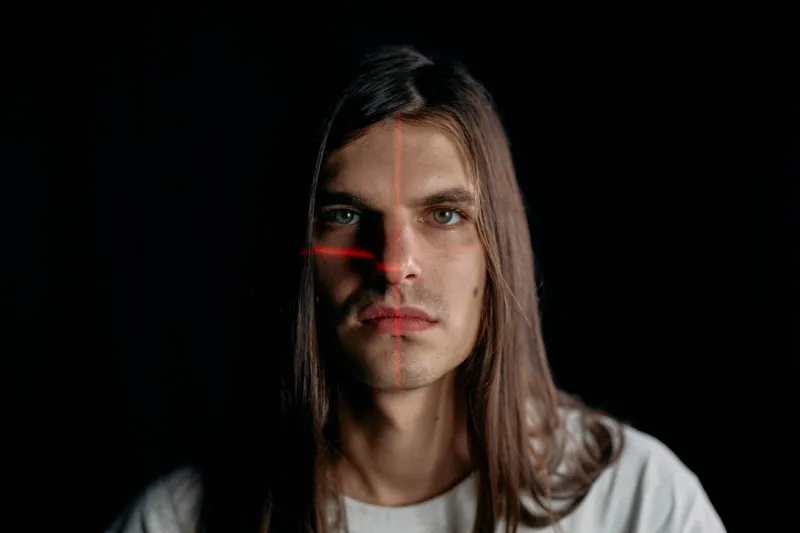
You're watching a prestige drama. The big moment is coming — the reveal, the confrontation, the death, whatever the writers have been dragging out for three episodes. But before the actual thing happens, the camera swings to someone's face. A jaw tightens. Eyes go wide. A breath catches. And suddenly your chest is doing something it had no business doing.
That wasn't an accident. That was an instruction.
The Cut That Arrives Before the Moment
Here's the mechanic, stripped down: editors routinely place reaction shots ahead of the event those reactions are responding to. Technically, that's a continuity violation. Emotionally, it's a cheat code.
When you see a character's face register shock before you've processed what they're shocked about, your brain doesn't flag the sequence error — it just accepts the emotional cue and starts loading the feeling. By the time the actual plot moment lands, you've already been primed. You're not reacting to the scene. You're confirming a reaction that was installed in you a half-second earlier.
This is sometimes called the Kuleshov effect in film school circles, named after a Soviet filmmaker who demonstrated in the 1910s that the same expressionless face reads as hungry, grieving, or lustful depending entirely on what you cut it against. Hollywood has known about this for over a century. Streaming has industrialized it.
Reality TV Built the Factory
If prestige drama perfected the technique, reality television turned it into a full production pipeline. Think about every elimination show you've ever watched — Survivor, The Bachelor, RuPaul's Drag Race. Before the host announces anything, the camera ping-pongs between contestant faces. Nervous eyes. Bitten lips. Someone clutching someone else's hand.
Here's what most people don't realize: those cutaway reactions are frequently filmed after the results are known. Producers bring contestants back for what's called a "pickup" shoot — sometimes hours, sometimes days later — and ask them to recreate the emotional state they were in during the original moment. The editors then splice those pickups into the sequence to maximize tension.
You're watching a manufactured memory of an emotion that has already resolved itself. The person on screen already knows what happened. You don't. The edit weaponizes that gap.
Documentaries Are Just as Guilty
Documentaries carry a reputation for honesty that makes this even more effective — and arguably more manipulative. True crime docs are especially skilled at this. A subject is being interviewed about an event from years ago. Their face shifts — a flicker of something — and the editor holds on it just a beat longer than feels comfortable. Then cut to archival footage. Then back to the face.
That held beat is doing enormous work. It implies guilt, or grief, or a secret being suppressed. But the subject might have simply blinked awkwardly. The editor chose to keep it. The editor chose when to cut away. The audience interprets the gap as meaning.
Some documentary filmmakers are transparent about this — Errol Morris famously built a device called the Interrotron specifically to create direct eye contact between subject and camera, partly to reduce the manipulative potential of cutaway editing. Most filmmakers aren't that conscientious.
Streaming Platforms Optimized the Science
What makes the current era different isn't that this technique exists — it's that platforms now have behavioral data to measure which version of a scene produces stronger engagement. They can A/B test edit cuts. They can track exactly where viewers rewind, where they pause, where they exit.
If a version of a scene where the reaction shot comes 200 milliseconds earlier generates a 12% longer watch time in the following episode, that information feeds back into production notes for the next season. The emotional manipulation becomes iterative. It improves.
This is what "prestige TV" actually means in 2024: not better writing, not braver storytelling — it means a production apparatus sophisticated enough to engineer your nervous system's response with the precision of a pharmaceutical trial.
The Face as a Redirect
There's another layer here that goes beyond timing. Reaction shots also function as attention redirects during moments the production team wants you to not scrutinize too closely.
When a plot twist doesn't entirely hold up to logic — when the mechanics of a reveal are a little shaky — cutting to a character's devastated face is an elegant way to move your focus from "does this make sense" to "how does this feel." Emotional processing and analytical processing compete for cognitive bandwidth. A perfectly placed close-up of a trembling lip can win that competition every time.
You've probably experienced this as the feeling of being moved by a scene in the moment and then, later, realizing the scene was actually kind of nonsensical. That's the redirect working. You felt your way through it instead of thinking your way through it, because the editor steered you there.
The Frame Is the Argument
None of this means you can't enjoy what you're watching. Entertainment has always been a negotiated manipulation — you buy the ticket, you accept the ride. But there's a difference between the willing suspension of disbelief and having your emotional responses systematically manufactured without your awareness.
The reaction shot industrial complex works because it operates below the threshold of conscious viewing. You're not reading a face as a symbol — you're feeling it as a signal. The edit collapses the distance between character and viewer, and by the time you notice the collapse, you're already invested in an outcome the production team decided months before you pressed play.
Next time you catch yourself tearing up or holding your breath before the big moment actually happens — before the door opens, before the verdict is read, before the name gets called — notice it. The camera already told you how to feel. The scene is just catching up.
That's not storytelling. That's engineering.