Your Eyes Are Lying to You: The AI Deepfake Crisis Hollywood Can't Ignore
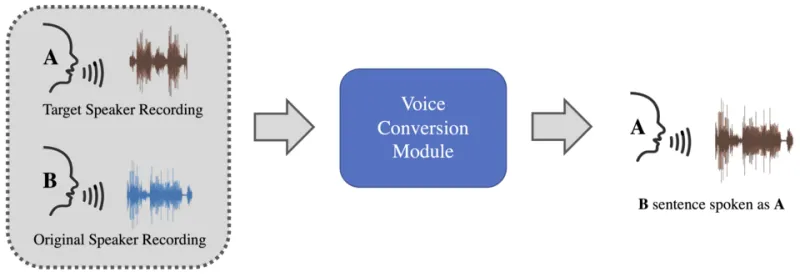
Photo: Antonelse, CC BY-SA 4.0, via Wikimedia Commons
There's a clip that circulated briefly in late 2023 — a major A-list actor, seemingly giving an unauthorized interview, saying things that would've ended careers. It spread across Reddit, Discord servers, and a handful of entertainment Discords before someone ran it through a detection tool and flagged it. The actor had never sat in that chair. The voice wasn't theirs. The whole thing was constructed, pixel by pixel, by a generative AI model that had been trained on thousands of hours of the actor's public appearances.
By the time the takedowns happened, the clip had already been seen by hundreds of thousands of people. Most of them never saw the correction.
Welcome to the era where your eyes have officially become unreliable narrators.
How We Got Here So Fast
Deepfake technology didn't arrive overnight, but its acceleration has been genuinely unsettling. What used to require a production studio's worth of computing power and a team of visual effects artists can now be executed by a single person with a mid-range laptop and access to open-source tools. The barrier to entry collapsed somewhere between 2021 and 2023, and the entertainment industry was caught flat-footed.
Early deepfakes were easy to spot — the telltale shimmer around hairlines, the uncanny valley blink patterns, the audio that didn't quite sync. But the latest generation of models has addressed most of those tells. Skin texture renders realistically under different lighting conditions. Eye movements now track with natural micro-expressions. Even the way someone's voice carries ambient room tone has been replicated with eerie accuracy.
The result? Clips that fool not just casual viewers, but journalists, entertainment reporters, and sometimes the celebrities' own publicists on first glance.
The Near-Misses Nobody Talks About
The entertainment industry has a vested interest in not publicizing how close some of these fakes got to going fully viral. Studios don't want audiences questioning the authenticity of promotional content. Platforms don't want to advertise that their moderation systems missed something until it was almost too late. And celebrities — understandably — don't want to draw more attention to fabricated content that could still surface in search results years later.
But the near-misses are happening with increasing frequency. A fabricated video of a well-known pop star allegedly announcing a surprise album drop spread fast enough to generate trending hashtags before her actual management account posted a denial. A fake interview clip featuring a veteran film director making inflammatory statements about a rival studio circulated in entertainment industry circles for nearly 48 hours before being debunked.
In each case, the damage was partial but real. Screenshots got taken. Quotes got clipped out of context. The correction rarely travels as far as the original claim.
Who's Actually Catching These Things
Here's the messy truth: the detection infrastructure is fragmented and inconsistent. The major platforms — YouTube, TikTok, Meta — have invested in AI-based detection tools, but those tools are in a constant arms race with the generation models. Every time a detection method improves, the generation models adapt. It's less a solved problem and more a continuous, exhausting game of digital cat and mouse.
Outside of platform-level moderation, a loose network of independent researchers, digital forensics specialists, and volunteer communities has emerged to fill the gaps. Organizations like the Content Authenticity Initiative, backed by Adobe and a coalition of media companies, are pushing for cryptographic provenance standards — essentially a digital chain of custody that lets you verify where a piece of media actually originated. But adoption is slow, and the average viewer isn't checking metadata before they share something.
Celebrities and their management teams have also started building internal protocols. Some high-profile talent agencies now run any suspicious content through multiple detection tools before responding publicly. A few have even started proactively watermarking authorized video content in ways that are invisible to viewers but detectable by verification software.
The Audience Problem Nobody Wants to Say Out Loud
Technology aside, there's a human element that makes this genuinely hard to solve: a significant portion of the audience wants to believe what they're watching. Confirmation bias is a powerful force. If a deepfake aligns with what someone already believes about a celebrity — that they're secretly difficult, secretly political, secretly whatever — the psychological resistance to questioning its authenticity drops significantly.
This is what makes deepfakes particularly dangerous in entertainment contexts, where parasocial relationships run deep. Fans have strong emotional investments in their perception of celebrities. A convincing fake that reinforces an existing narrative can spread through fan communities with almost no friction, because the people sharing it aren't approaching it as skeptical media consumers. They're approaching it as believers.
And that's the uncomfortable decode at the center of all this: the technology is a problem, but the real vulnerability is psychological. Deepfakes exploit the trust we extend to visual media — a trust that was built over more than a century of film and photography operating on the implicit assumption that the camera doesn't lie.
That assumption is now officially obsolete.
What Actually Changes From Here
The entertainment industry is going to have to make some uncomfortable structural changes. Studios are already inserting deepfake clauses into talent contracts, specifically addressing unauthorized synthetic likenesses. SAG-AFTRA's ongoing negotiations around AI have put the issue front and center for working actors who are increasingly concerned about their digital identities being replicated without consent or compensation.
On the platform side, expect more aggressive content authentication requirements for anything featuring real public figures. The EU is already moving toward mandatory disclosure labels for AI-generated content. US regulatory movement has been slower, but the pressure is building.
For audiences, the practical takeaway is straightforward even if it's uncomfortable: slow down before you share. Check the source. Look for an official channel confirmation. The 51EY rule of thumb — if something feels engineered to provoke an immediate reaction, that's exactly when you should pause longest.
Because in this new landscape, the clips designed to fool you aren't the sloppy ones. They're the ones that feel the most real.